

The Church of Organizing: Forging a Path to a Democratic Future Through Belonging, Agency, and Power

The elections last month stirred hope that we can forge a path out of our democratic crisis. The sweeping Democratic victories are evidence that Americans are rejecting the autocratic program of the current administration and Congress: the assaults on vulnerable communities, gutting of health and safety net programs, stifling of dissent, and attacks on civil liberties and the rule of law. The members and leaders of my organization, Pennsylvania United, mobilized voters to secure victories in the critical Pennsylvania Supreme Court retention races and ran the table in local elections across Western and Central Pennsylvania.
However, if we want to pull out of the doom-loop cycle of electoral victories and defeats and achieve durable, pro-democracy governing power, it is crucial that we have a proper diagnosis of the challenge we are facing. At the root of our crisis is a growing belief that democracy isn’t working and that collective participation and government cannot deliver for ordinary Americans. A sense of disconnection, isolation, anger, and lack of power has caused many people to disengage from politics. Others are throwing in with a strongman who scapegoats the vulnerable and tramples on democratic norms and institutions.
How do we solve this crisis of democracy? It is, fundamentally, a crisis of belonging, agency, and power. To resolve it, people must believe that civic life can work, that engaging in politics and the democratic process can improve their lives and communities. Simply mobilizing people for elections is inadequate to the task: we need to create experiences of power and agency, where people unite in successful efforts to get government to deliver tangible benefits for their communities.
Activating the Politically Disengaged: Pennsylvania United and the 2024 Elections
The work of building civic power and agency is core to the mission of my organization, Pennsylvania United (or PA United). PA United was founded in 2017 as a multiracial, multigenerational power organization uniting working-class people across urban and rural areas in Western and Central Pennsylvania.
PA United runs large-scale voter contact programs and helps elect candidates who stand for our priorities, with a particular focus on running our own members for office. Our goal goes beyond winning elections or voting Democrats into office. From years of organizing poor and working-class people across Western Pennsylvania, we see the ways in which the national Democratic Party often does not provide a vision that engages and inspires them. For the millions of working people who are disillusioned and disconnected from politics, building their faith in the democratic process starts with local organizing and collective action that can deliver material wins on the issues that matter most to them: ensuring access to quality, affordable housing; reducing youth violence and promoting community safety; curbing pollution; and more. Rebuilding a pro-democracy coalition that can confront authoritarianism and win elections requires us to instill in poor and working people a sense of their own collective power and agency. If we’re ever going to change the rules of the game so democracy works for everyone and make government more responsive to our needs, it will take a major upswell of people-power to demand it.
A key part of this work is electing candidates who come out of these very same communities and who are deeply committed to an inclusive, multiracial, populist agenda that serves the interests of working-class people. They are the kinds of candidates and elected officials who can restore working people’s belief in the democratic process and cut the legs out from under authoritarianism. And when more candidates like them run under the Democratic Party banner, the party can begin to redeem a brand that has lost credibility among a broad swath of its historic, working-class base.
In 2024, PA United and more than two dozen other state-based power organizations in 10 states participated in an expansive research project sponsored by the Pro-Democracy Campaign, the Organizing Lab at the State Power Fund, and DPI Action Fund. The research has given us important insights into the reach and impact of our electoral and organizing programs.
Our voter engagement programs, which included door-to-door canvassing and one of the largest community-driven phone banking operations in the country, reached 442,000 people in 2024. An analysis that the Democratic Data Exchange (DDx) undertook as part of the research project revealed that we contacted nearly 130,000 voters that no other Democratic campaign or progressive, independent GOTV operation reached—including well-funded campaigns like the Harris-Walz campaign. And our contact rate–the percentage of people we successfully reached by phone or door knocking—was 22%, more than four times the average contact rate of Democratic and progressive GOTV operations according to the DDx analysis.
How were we able to reach so many people whom no one else could? What lessons does our work hold for engaging people who are disillusioned with politics or drifting towards authoritarianism?
On one level, the success of our programs rests on its solid tactical and design features—the quality of our lists, scripts, and volunteer and staff training. At a more foundational level, our ability to reach people that other campaigns and voter contact programs haven’t been able to is due to our deeper engagement in our communities, our understanding of community members’ most pressing concerns and interests, and our work to connect voting to local issue campaigns that deliver real and tangible benefits.
Building Community and Belonging in Aliquippa
For example, our Beaver County chapter organizers have been working to build community, a sense of belonging, and power among residents of Aliquippa, a city of approximately 9,000 people in the greater Pittsburgh metropolitan area. Aliquippa is an economically distressed former steel town—a site of one of the original Western Pennsylvania steel mills—and also a football powerhouse that has produced NFL Hall-of-Famers Mike Ditka, Tony Dorsett, Ty Law, and Derrell Revis. Police brutality is endemic; in September, an ATF agent shot and killed 18-year-old Kendric Curtis.
Joe Biden and Kamala Harris both made campaign stops in Aliquippa in 2024. However, despite this short burst of attention, many Black members of the community remained skeptical about their candidacies. Katrina Gamble, Terrance Woodbury, and Roshni Nedungadi, researchers who have studied the Black electorate closely, use the term “rightfully cynical” to describe a segment of Black voters who are distrustful of politics because they have experienced the consequences of long-term institutional failures in their communities—struggling schools, poverty and lack of economic opportunity, and gun violence—and the failures of government to adequately address these problems. A candidate making a one-time appearance during election season is not going to overcome this skepticism about the political process. Nor is a four-week GOTV blitz.
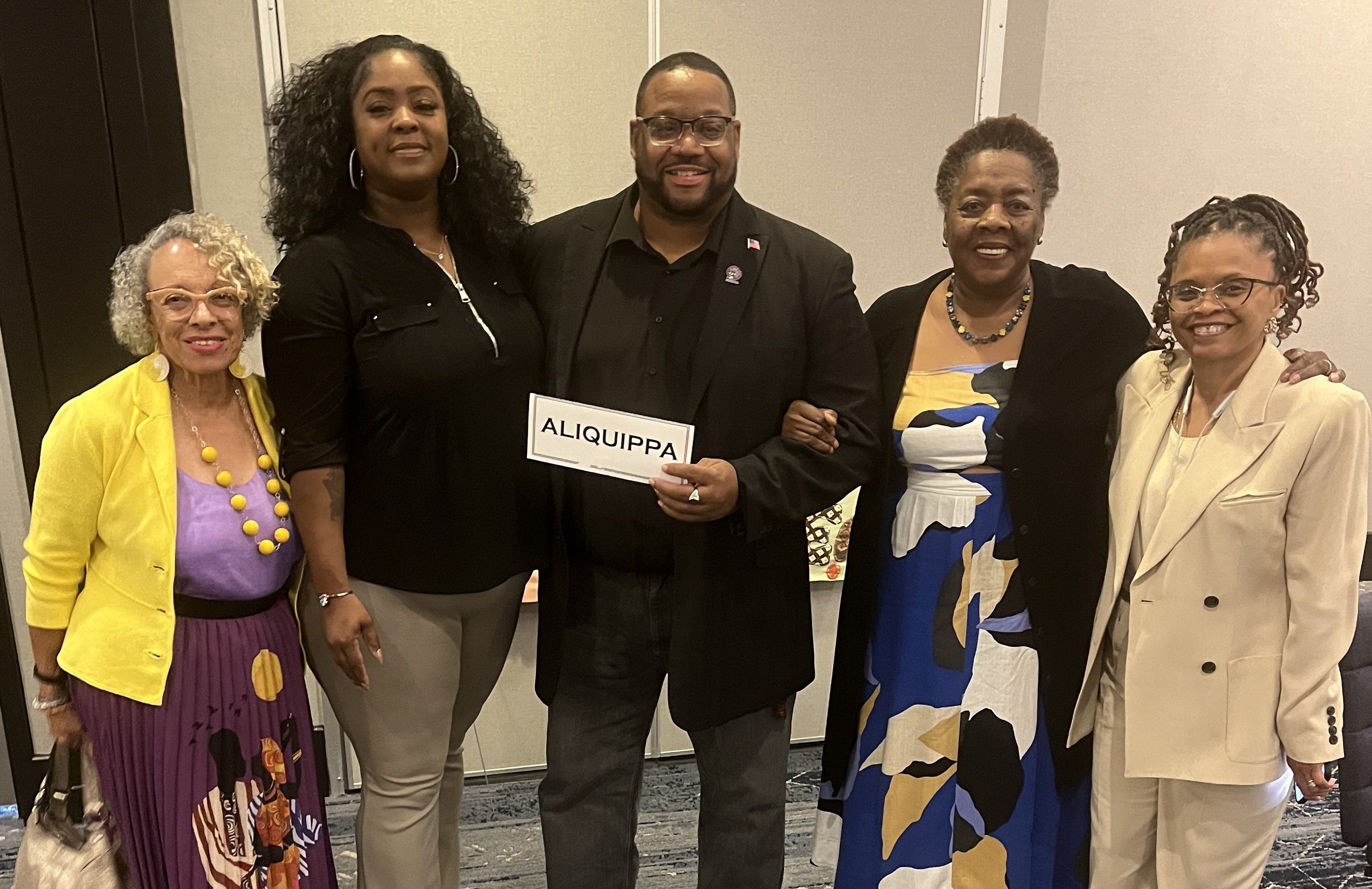
Heaven Lee is our lead organizer in Aliquippa, working alongside our year-round canvass team there that is made up of four people who are all under the age of 25. They all grew up in Aliquippa, and have been working in and with the community every day for the last six years. They’ve knocked on the door of every house in town perhaps a dozen times, connecting people to resources, organizing around issues, and urging people to vote. But more importantly, they have worked diligently and lovingly to build a sense of community cohesion and belonging: hosting trunk or treats for neighborhood kids and organizing vigils and Friendsgiving dinners for people who’ve lost loved ones to gun violence, as well as countless community events over the years that have provided culturally relevant on-ramps to bring people into organizing and that have built deep trust with people. Now, when tragedy strikes, community members turn to Heaven and Beaver County United to both find a space for grief and healing and a space to take meaningful action together.
This hard-earned trust is what it takes to overcome the well-earned cynicism people in Aliquippa feel about politics. It is the kind of deep commitment and engagement we need to nurture the faith and participation of people who have been let down by our political system.
Organizing Mobile Home Residents in Meadville
Some 90 miles north of Aliquippa lies the town of Meadville. While Aliquippa is 37% Black, Meadville’s 13,000 residents are overwhelmingly white. In 2021, our Crawford County chapter helped elect Mayor Jaime Kinder, the first ever Black person and the first woman mayor of the city, and elected our own members into a majority on the Meadville City Council. In the elections last month, PA United helped Mayor Kinder win re-election and won two city council elections, giving our members a 5-0 governing majority on the council. With real co-governing power in the city, the Crawford County chapter has developed a broad vision of housing affordability that is directly meeting the needs of poor and working class people: creating a rental inspection program that has fixed up dozens of properties in town, passing an anti-retaliation ordinance that protects tenants who are advocating for their rights, organizing people into tenants unions, taking over the local Housing Authority board, and partnering with a housing cooperative to build new tenant-owned affordable housing.
Over the last year, PA United leaders and organizers have organized residents of two mobile home parks on the outskirts of Meadville. A New York-based company bought the parks and in short order jacked up the rents. Our Crawford County chapter organized the residents of the mobile home parks into a tenant union and helped them win repayment of rents that the company had charged illegally, a new lease with enhanced tenant protections, and recognition of the tenant union.
The residents of the mobile home parks hold a broad spread of political opinions and include many Republicans and people who voted twice for Donald Trump. As we’ve brought them into campaigns to improve conditions and address rent gouging in their communities, our organizers and chapter leaders are challenging them to relate strategically to elected officials of both parties based on their shared interests. At the local level, our members on Meadville City Council and Mayor Jaime Kinder—who are Democrats—have been strong champions for the residents’ campaign. In contrast, not one of their local, Republican state legislators has weighed in to support the residents in their efforts to secure a tenant union contract.
When I was knocking doors in Meadville last month to do voter turnout the weekend before the election, I had a Republican white man in his 40’s say to me, “Oh I know Mayor Jaime, she’s with the renters. So I’m with her.” The combination of a clear housing agenda that is delivering for people and direct support for tenant organizing has created a strong brand for our member-elected officials that crosses party lines and moves us closer to a powerful and durable pro-democracy voting coalition.
The Lessons of Aliquippa and Meadville
These two communities shine a light on why PA United was able to connect with so many voters that well-funded Democratic and progressive GOTV campaigns neglected or failed to reach in 2024. Most Democratic political campaigns steer clear of communities like the mobile home parks in Meadville because their data shows they are likely Trump voters—never mind that they are working-class people with economic concerns that align with poor and working class voters in urban areas. And for far too long, Democrats have taken places like Aliquippa for granted, assuming that Black voters, with no better options, will respond to short-lived, election-year campaign appeals.
In contrast, our chapters have invested deeply in the people of these communities, creating a sense of belonging and working with them on long-term strategies to build co-governing power and mobilize the resources of government to solve the problems that are vexing their families and neighbors. As important as the material benefits that can come from successful organizing, our members are finding purpose in coming together with others to make a difference in their communities. After our election victories earlier this month, one leader told me the experience of working on the election was like finding their church in PA United.
If we’ve learned the right lessons from 2024, we know that neglecting places like Meadville and Aliquippa is both a losing electoral strategy and bad for democracy. Without constructive pathways to political engagement that give people a sense of agency and produce concrete results for their families and communities, more and more working-class people of all races will disengage from politics or worse, move toward the politics of authoritarianism.
On the other hand, when we provide a vision for a bold, inclusive, populist agenda; create spaces for belonging, collective action, and local wins that deliver tangible materials benefits to people; and elect people who champion working-class issues and co-govern with us, we can build faith in the democratic process among people in places like Aliquippa and Meadville. We can unite poor and working-class people, including those who in their cynicism have turned towards a strongman, and build a pro-democracy coalition that can change the direction of our country.
Alex Wallach Hanson is the Executive Director of Pennsylvania United, and its 501c3 affiliate, Pittsburgh United. Pennsylvania United is a grassroots group that supports working-class families in Western Pennsylvania through chapters led by its members.
 | A guest post by
|